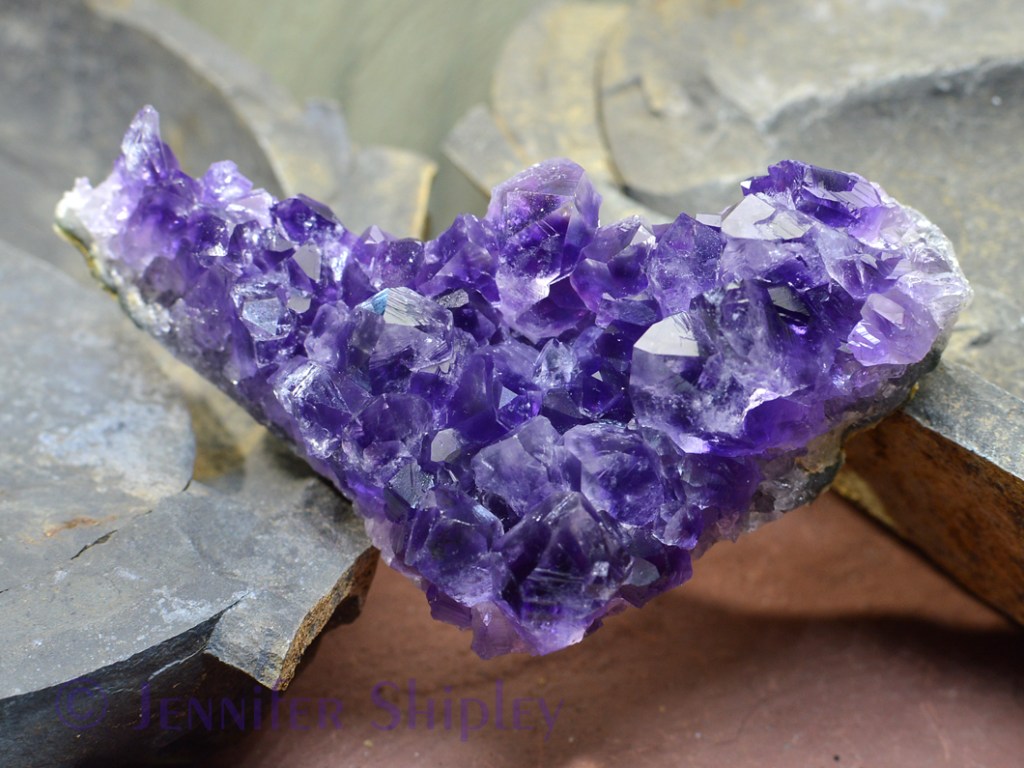
Mineralogy, Geological Origin and Traditional Metaphysical Uses
Amethyst is a purple variety of quartz (SiO₂) with a Mohs hardness of 7. Its color forms when iron substitutes into the crystal lattice and is later exposed to natural gamma radiation in the earth. The radiation changes the oxidation state of the iron, producing the violet tones we recognize as amethyst.
Trace elements such as aluminum can influence saturation and shade. Color ranges from pale lavender to deep violet.
Now that we’ve grounded it in chemistry, let’s talk about how it actually forms.
Geological Origin & Crystal Structure
Amethyst forms in hydrothermal environments, most commonly inside volcanic rock cavities.
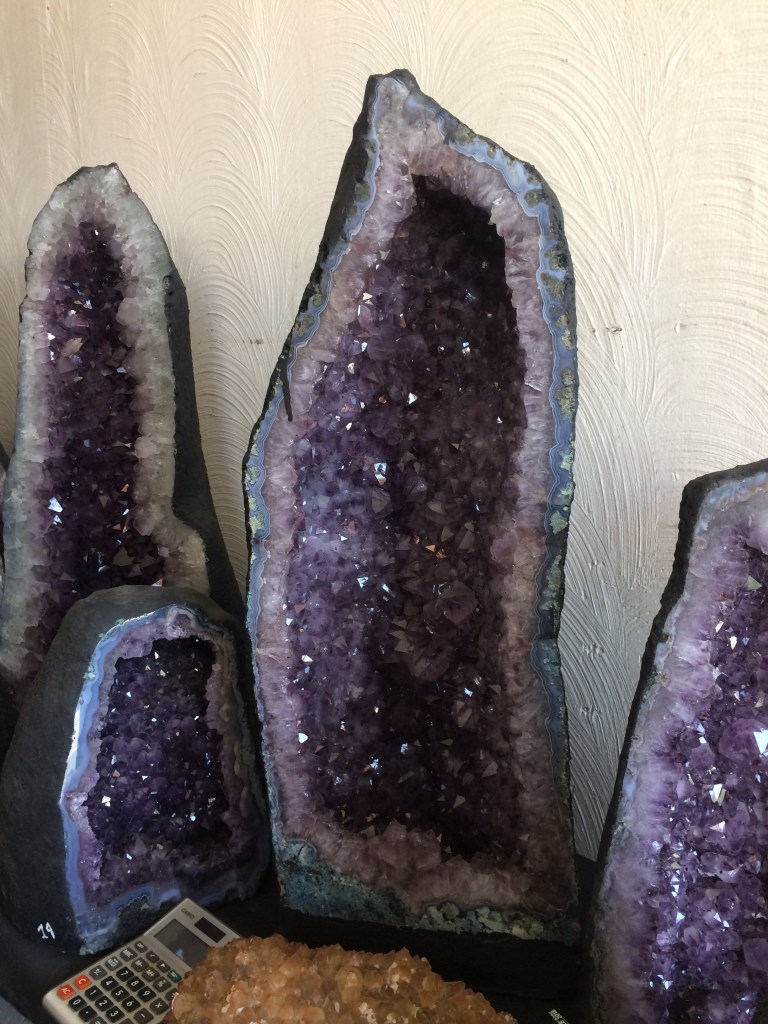
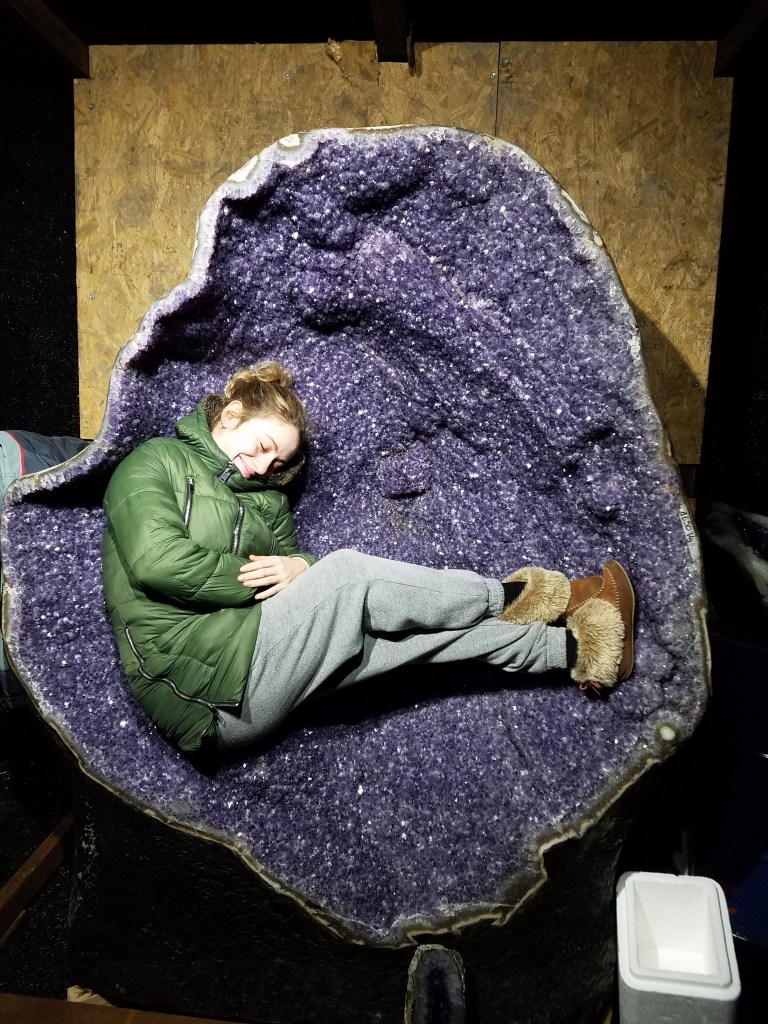
In Brazil and Uruguay, silica-rich fluids filled gas pockets within basalt flows. As the fluids cooled, quartz crystallized inward from the cavity walls, creating geodes.
- Brazilian amethyst typically forms in tall cathedral-style geodes.
- Uruguayan amethyst forms in rounder geodes and is prized for its deep, saturated purple color.
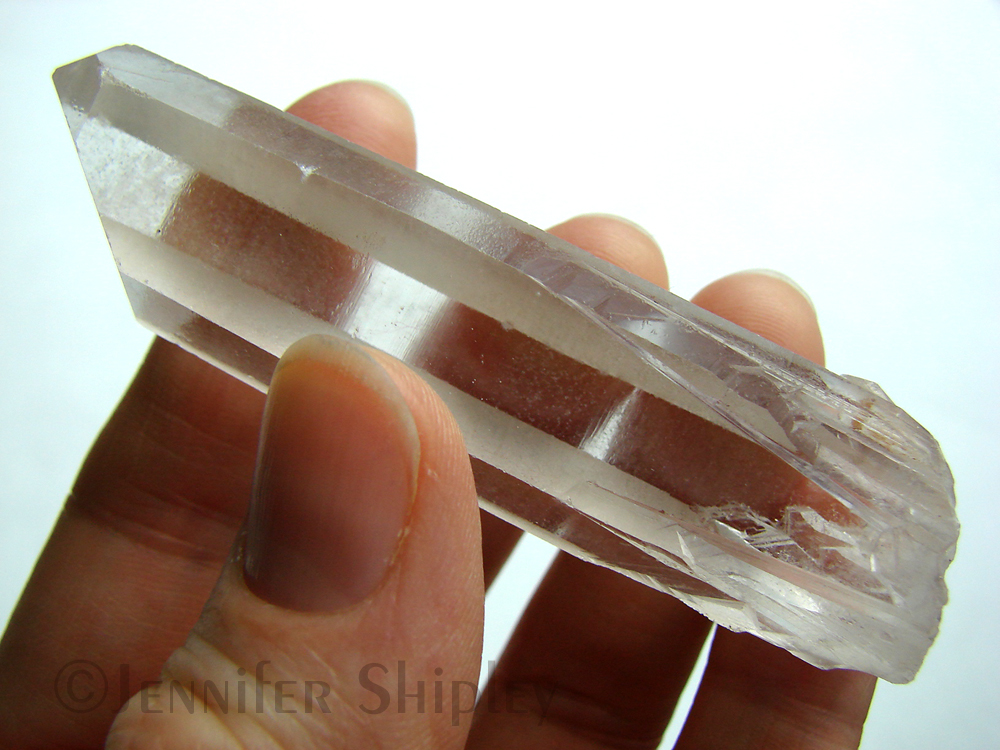
Quartz crystallizes in the trigonal crystal system. A typical quartz crystal shows six prism faces and a termination composed of rhombohedral faces, often including m-faces.
Crystal Habit
Quartz habit refers to the external shape a crystal naturally develops.
Dog-Tooth Amethyst
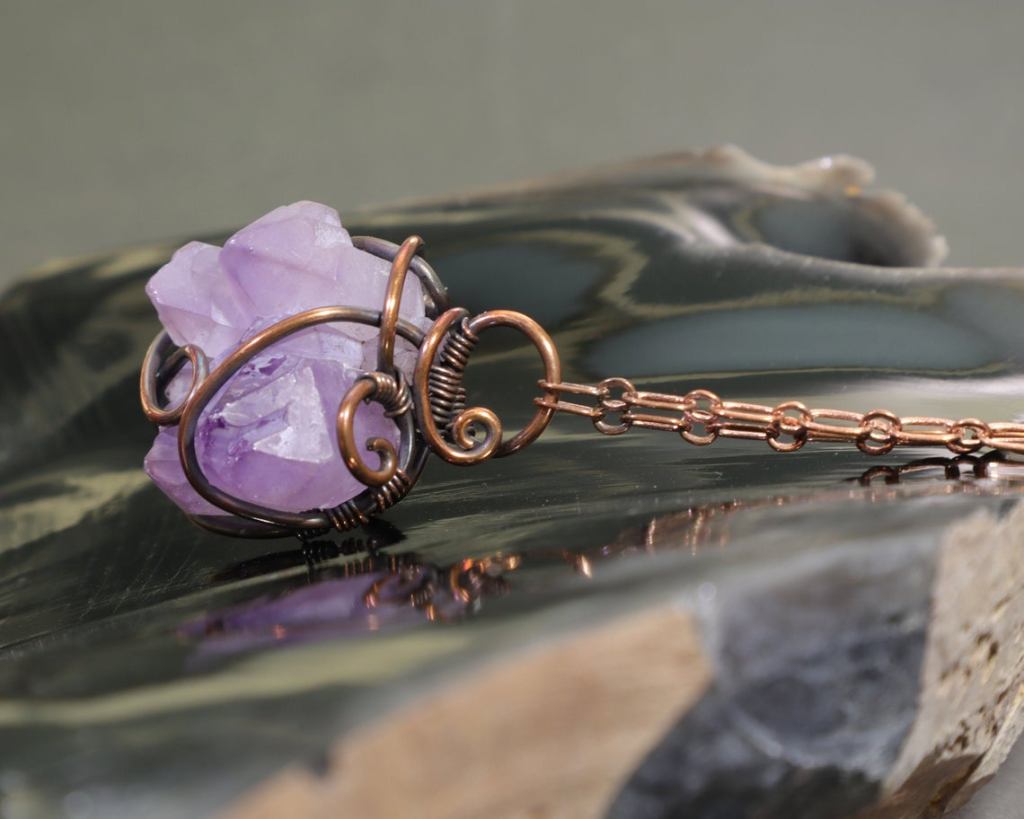
Most amethyst crystals lack well-developed m-faces due to growth interference (also called growth inhibition) from adjacent crystals in the cluster. This produces the familiar “dog tooth” shape.
Clear quartz more often displays full m-faces. Comparing the two teaches you to recognize interference patterns.
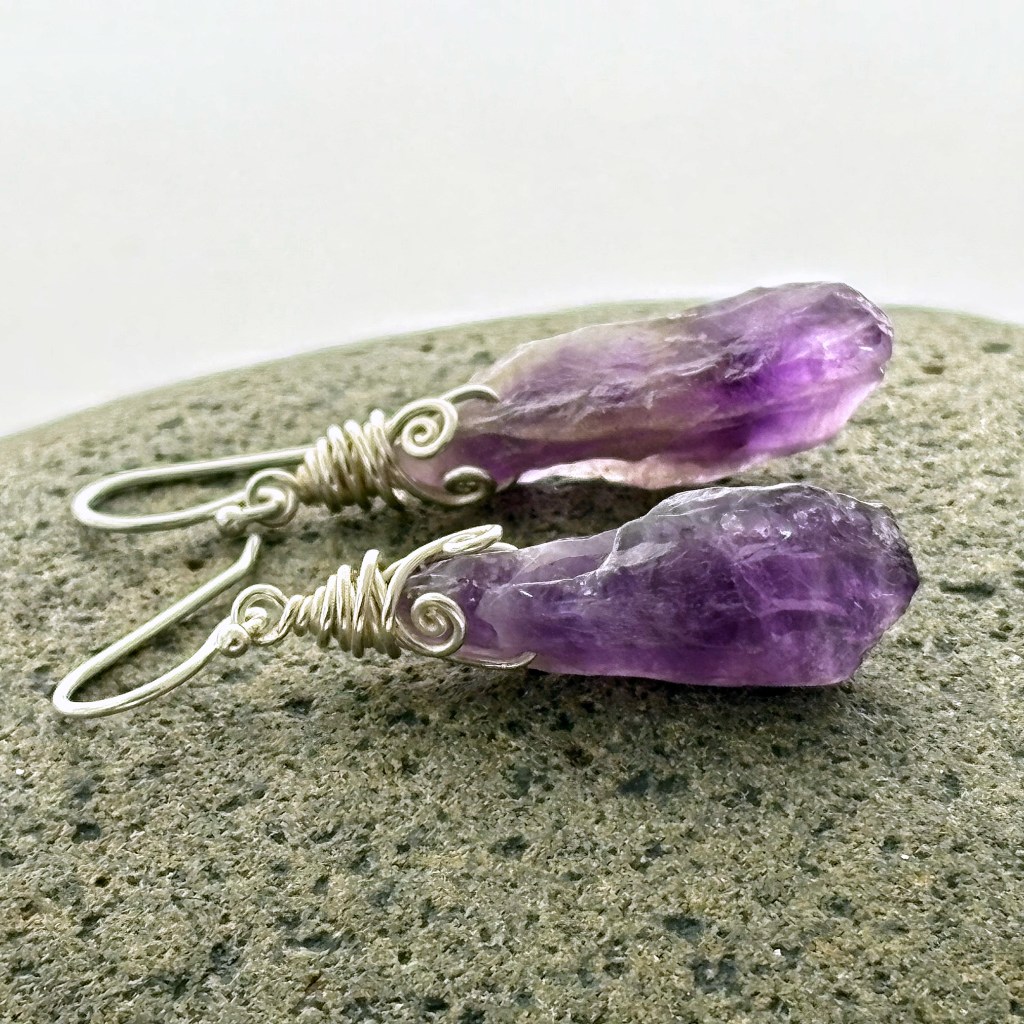
Raw vs Rough
- Raw crystal: An intact terminated specimen. The sides and termination are visible. It may still be attached to matrix or may have been cleanly separated.
- Rough: Broken chunks of gemstone material intended for cutting or grinding. Rough may occasionally contain a natural facet, but it is not an intact terminated specimen.
They are not interchangeable terms.
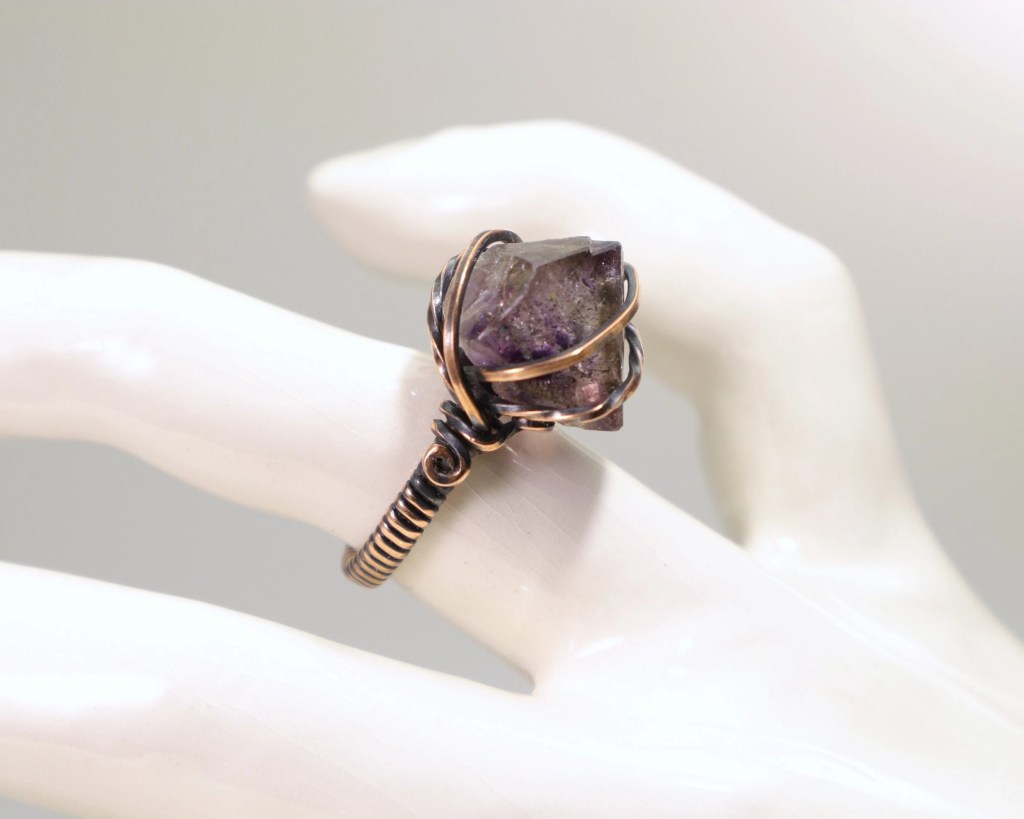
Double Terminated & Elestial Crystals
A double-terminated crystal has terminations on both ends.
An elestial is a single crystal body with three or more terminations whose m-faces run parallel. It may appear complex or layered, but it is not two separate crystals fused together (which would be a twin).
Elestials are rare in amethyst.
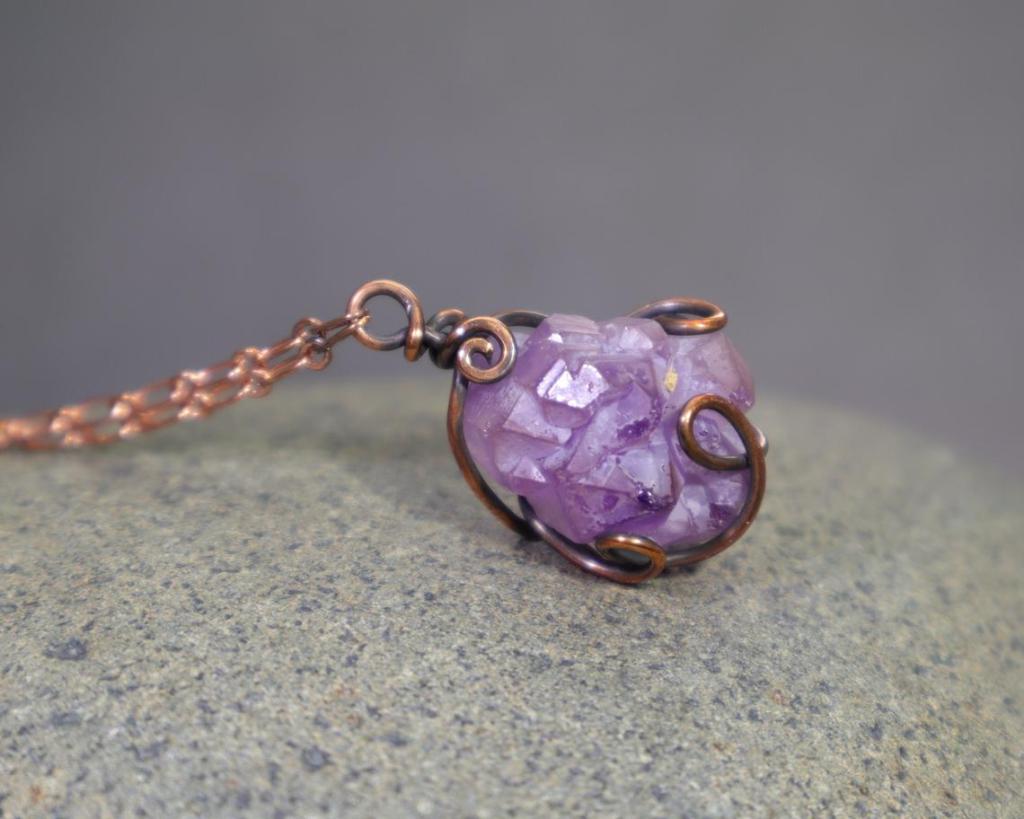
Ametrine & Spirit Quartz
When part of an amethyst crystal is exposed to heat and later continues to grow, you may see both purple and yellow zones in the same crystal. That is ametrine.
Some spirit quartz specimens display ametrine coloration. Not all ametrine is spirit quartz, and not all spirit quartz is ametrine.
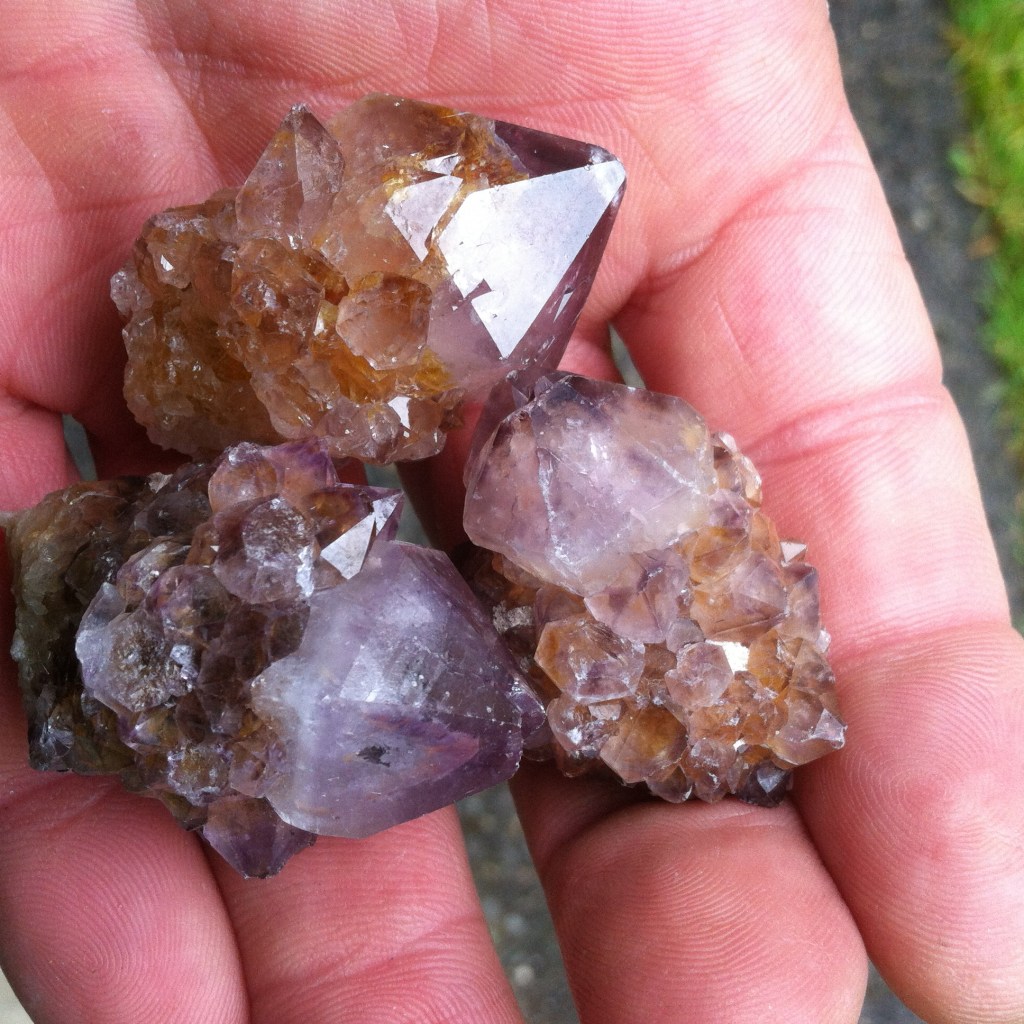
Heat and Citrine
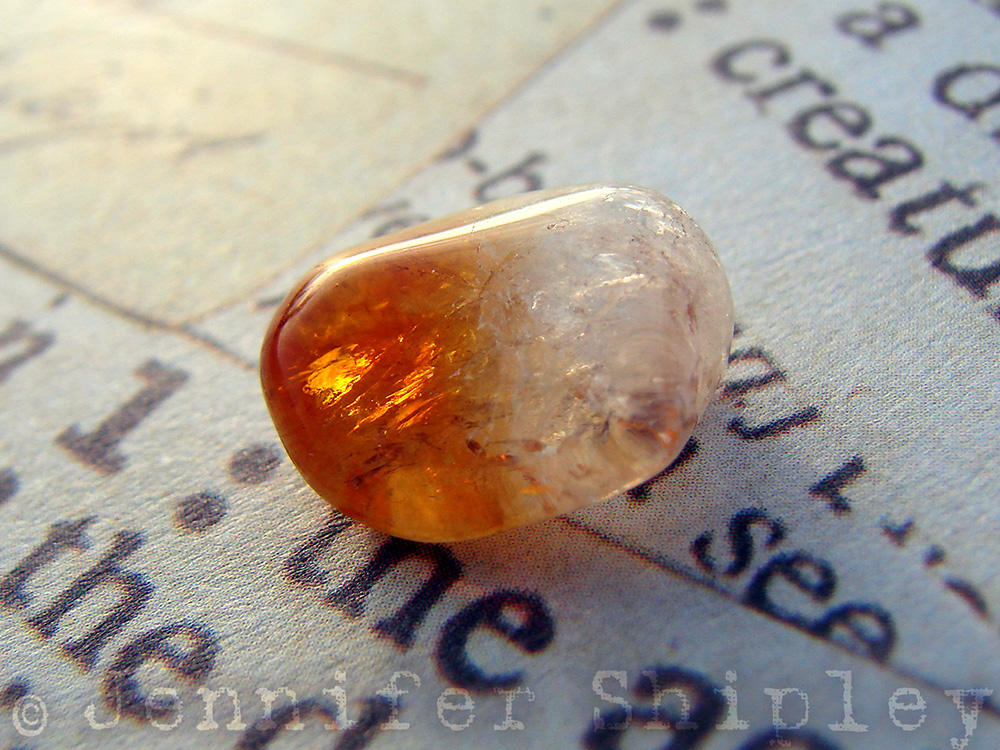
When heated to approximately 842°F (450°C), amethyst turns yellow. Most citrine on the market is heat-treated amethyst because amethyst is abundant and true unheated citrine is rare.
Unheated citrine (sometimes called lemon citrine) is colored by aluminum, lithium and hydrogen instead of iron and is significantly less common.
For deeper comparison, see my citrine article.
Light Sensitivity
Amethyst can fade in prolonged direct sunlight. Store it away from bright UV exposure when not in use.
Metaphysical & Traditional Associations
(Brief note: Crystals are not medical treatment. Historical uses and personal experiences are not meant to replace medical care. If you have a medical condition, please follow the advice of your doctor.)
Amethyst has long been associated with clarity, moderation and spiritual awareness. In ancient Greece, it was even believed to prevent intoxication.
I love to use amethyst for centering. For me, it steadies mental noise. It’s not sedating. It just organizes chaotic thoughts and helps me feel more focused and clear-headed.
It has traditionally been used for:
- Calming racing thoughts
- Supporting meditation
- Easing tension
- Encouraging balanced decision making
Historically it has also been used for headaches, insomnia and nervous tension. Although it cannot replace a good therapist or doctor, these are the common traditional metaphysical uses.
Chakras & Correspondences
Amethyst is most strongly associated with:
- Crown Chakra — higher awareness
- Third Eye Chakra — intuition and perception
It can also gently anchor through the heart when worn at chest level.
Elements: Water and Air
Zodiac: Pisces, Aquarius, Virgo, Sagittarius
Birthstone: February
Number Vibration: 3
Cut Shapes & Energy Direction
Different shapes in crystals move energies in different ways.
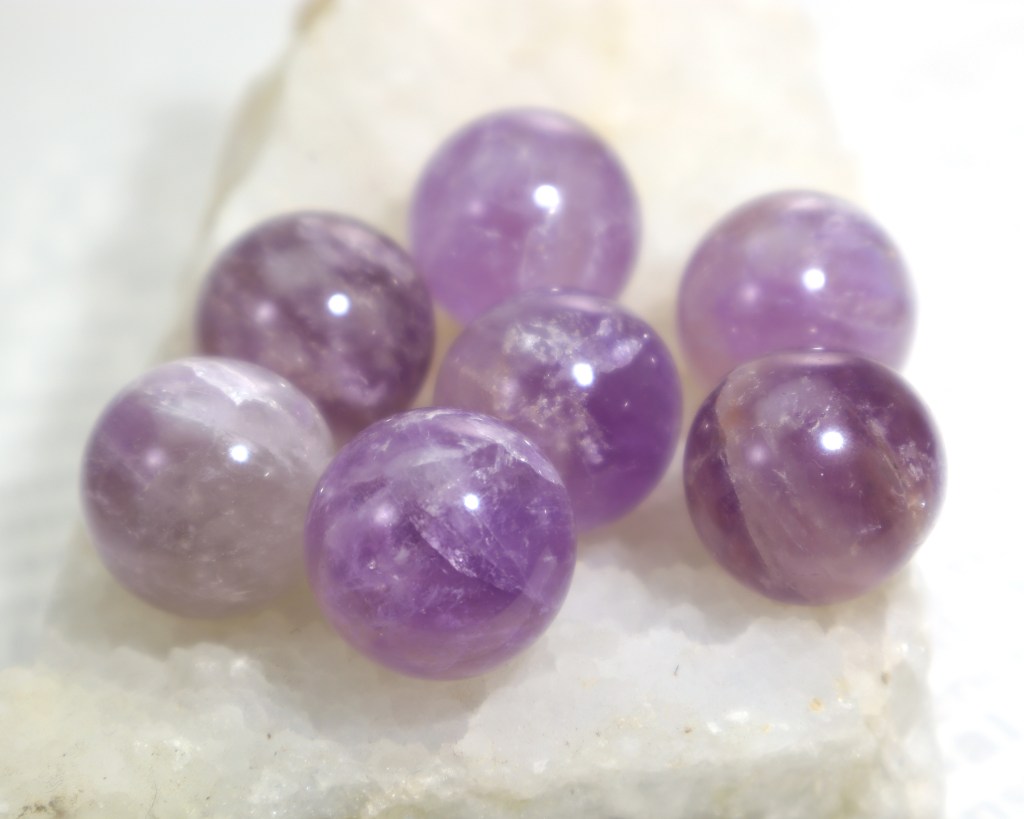
A sphere radiates energy evenly in all directions.
A point directs energy most strongly outward through the termination and draws inward through the base. A shorter, broader point produces a wider beam. A long tapered point creates a more focused, intense channel.
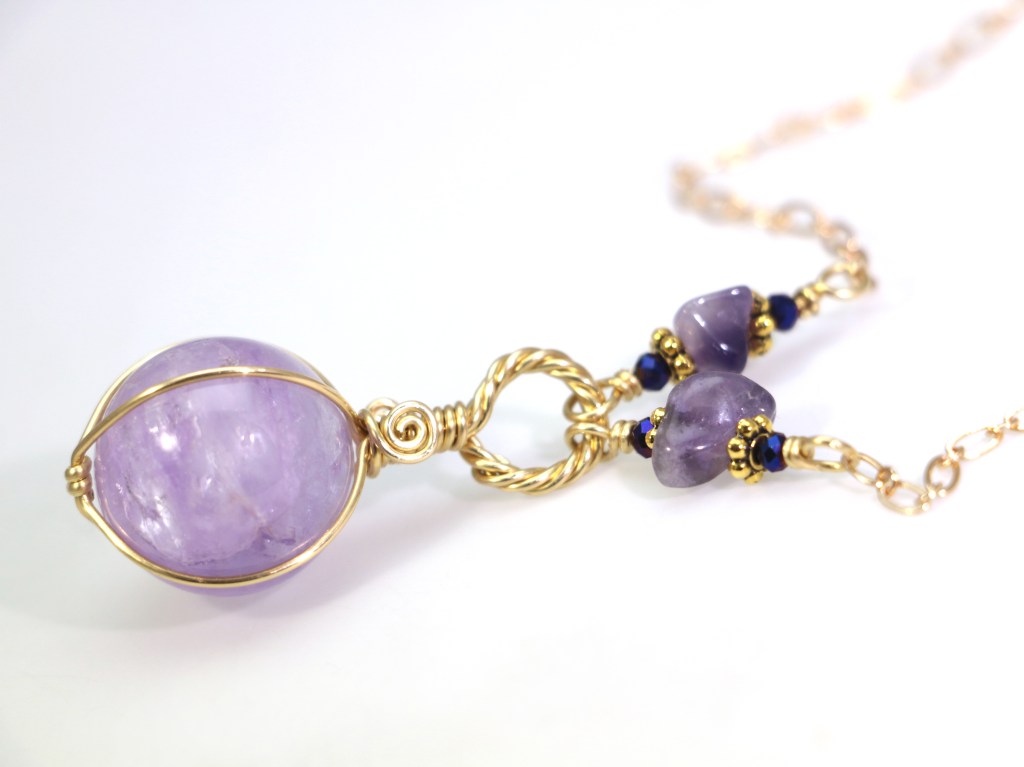
I sell a lot of amethyst spheres particularly in jewelry because they radiate their emf outward fairly evenly in all directions, so it doesn’t matter which direction they are oriented. In my own use, I usually prefer to work with raw crystals, spheres being the only exception to that. I have found them to be not only convenient and versatile, but absolutely delightful to look at.
Explore my Gemstone Guides page for more information on rocks and minerals, how they form and their metaphysical properties.
 Art, Jewelry & Gemstones | DoodlepunkArt