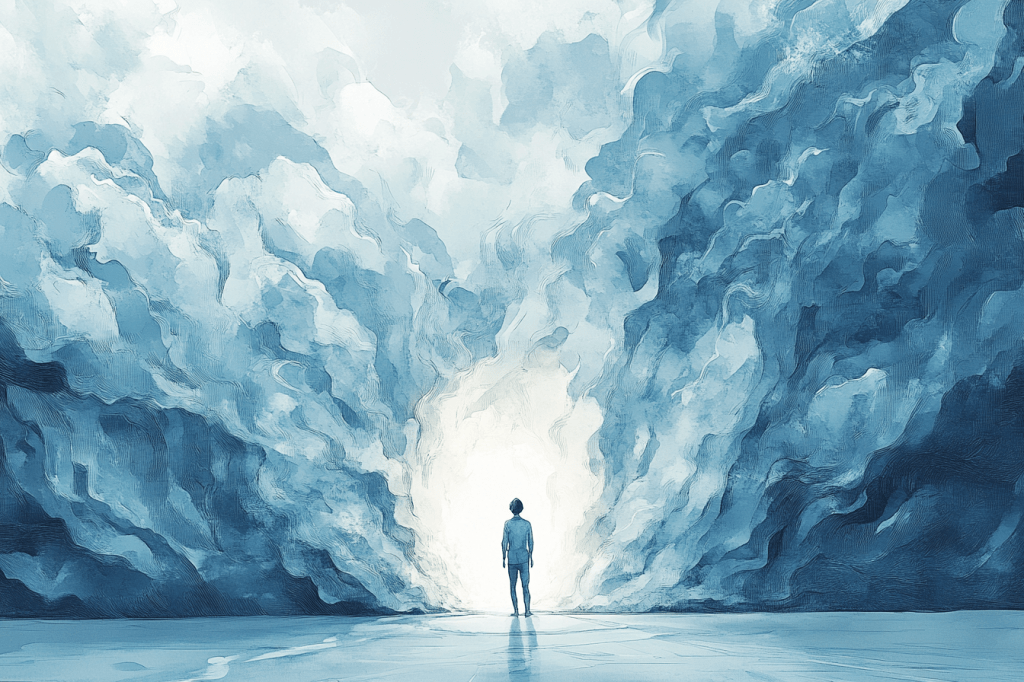


Whether it be anxiety, anger, or sadness, I use a technique called RAIN to navigate through the inevitable unpleasant emotions that come with being human. I say “navigate through” instead of “around” because the only way to the other side of an emotion is to move through it. Think of negative emotions as an infinite wall—extending in every direction. You can spend your life walking alongside it, trying to dig under or leap over, but you’ll never get past it that way. The only way through is to break a hole in the wall. RAIN is a method for doing just that.
I learned this technique from the podcast of a wise teacher, Tara Brach, who shares weekly talks through the Insight Meditation Community of Washington, D.C. RAIN stands for Recognize, Allow, Investigate, and Nurture/Navigate—a process that helps emotions lose their grip by addressing them head-on.
How I use RAIN:
- Recognize: Instead of keeping busy to avoid my feelings, I stop and acknowledge them. I name them. For example, “I am feeling anxious.”
- Allow: I don’t fight the feeling or try to push it away. Instead, I give it space, letting it exist without resistance. Feelings need to be felt before they can pass. I greet them with curiosity: “Welcome, Anxiety. I feel discomfort in my chest—tight, heavy, pressing. It’s unpleasant, like a black, strangling lump.”
- Investigate: I ask myself what triggered the emotion and why. “Why am I anxious? Every time I think about my trip to Seattle, it flares up. Is it just that I don’t want to go? No, it’s more than that. I’m worried about the warning light on my dash. I’m worried about traffic. What if I get lost? What if I have a sneezing fit and crash my car? What if I just can’t handle this?”
- Nurture/Navigate: This is where the shift happens. Instead of berating myself for feeling this way, I offer understanding. If I’m sad, I remind myself it’s natural. If I’m anxious, I reframe my thinking and make a plan: “I feel incapable, but that’s just old programming. The truth is, I’ve handled much harder things. I’ve done this drive before, even when I was sleep-deprived and in worse health. I’ll leave plenty of space between cars in case I sneeze. My phone will be fully charged, and I’ve already checked—this warning light is just a sensor, not an actual issue. If I get confused, I’ll use my maps app. And while I’d rather be home with Boo, there are upsides: I’ll see familiar faces, get this checked off my list for two months, and at least the weather’s decent. I’ll queue up my favorite podcasts and enjoy this as a break from problem-solving. This will be a good day.”
By the end of RAIN, what started as anxiety has transformed into acceptance—and even anticipation. The worries, rooted in self-doubt, have been disarmed. The road trip that once seemed overwhelming now feels like an opportunity.
 Art, Jewelry & Gemstones | DoodlepunkArt