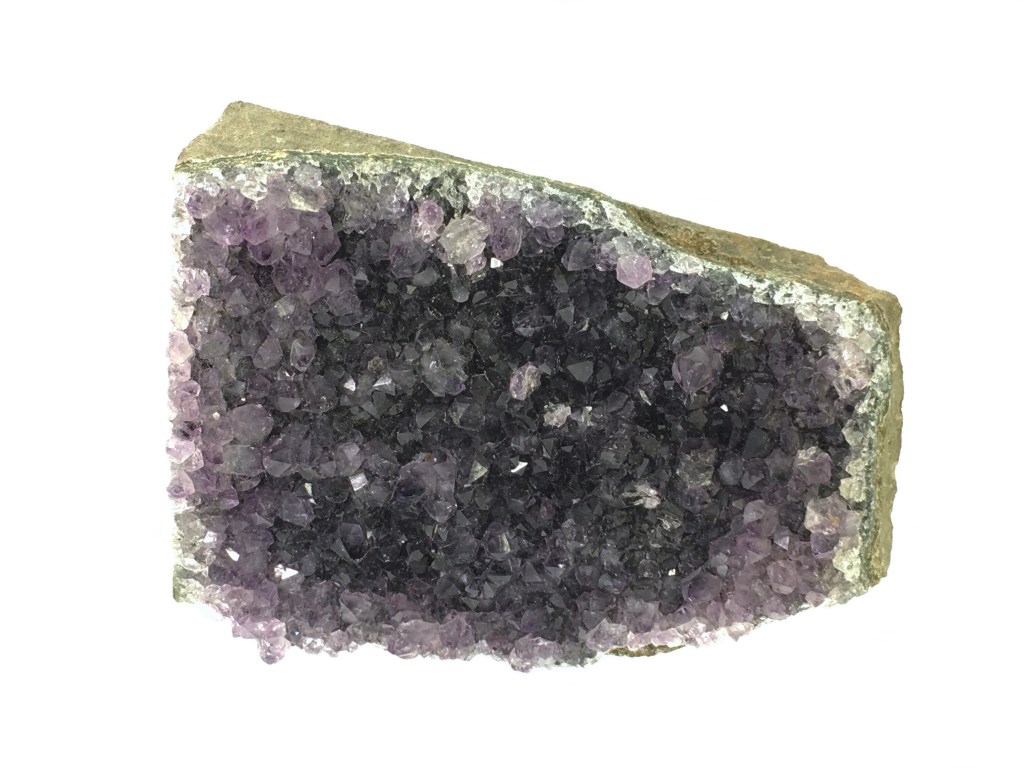
Amethyst is a purple variety of quartz with a mohs hardness of 7. The purple color is mainly due to iron impurities built into the SiO2 molecular structure that have been exposed to natural gamma radiation. Amethyst can have other elements trapped in the crystal lattice, like aluminum, which can affect the shade of purple. This crystal is light sensitive and will fade in direct sunlight. Please store in the dark when not in use, and I do not recommend cleansing and charging in direct sunlight.
Amethyst aids in calming, centering and promoting a sense of happiness and well-being. This stone brings serenity and patience, relieving frustration by helping us see that there is plenty of time. Amethyst mellows out high strung individuals and it encourages moderation in those who tend to “over do it.” It’s a good stone for anyone who tends to over-think or have racing thoughts.
Amethyst is used in scrying and meditation to increase spiritual awareness and insight. It helps us become our ideal selves by aligning us with our intuition and higher-self. This healing crystal helps us see the truth about ourselves and other people, and do what is best for all involved.
Amethyst is a stone of balance, change, transformation, cleansing, uplifting, sleep, memory, peace, love, harmony, vision, insight and understanding. It clears blocks and resistance from body and aura. It has been used throughout history to treat headaches, racing thoughts, insomnia, disorders of the nervous system and spasms. Amethyst is associated with the Elements Water and Air.
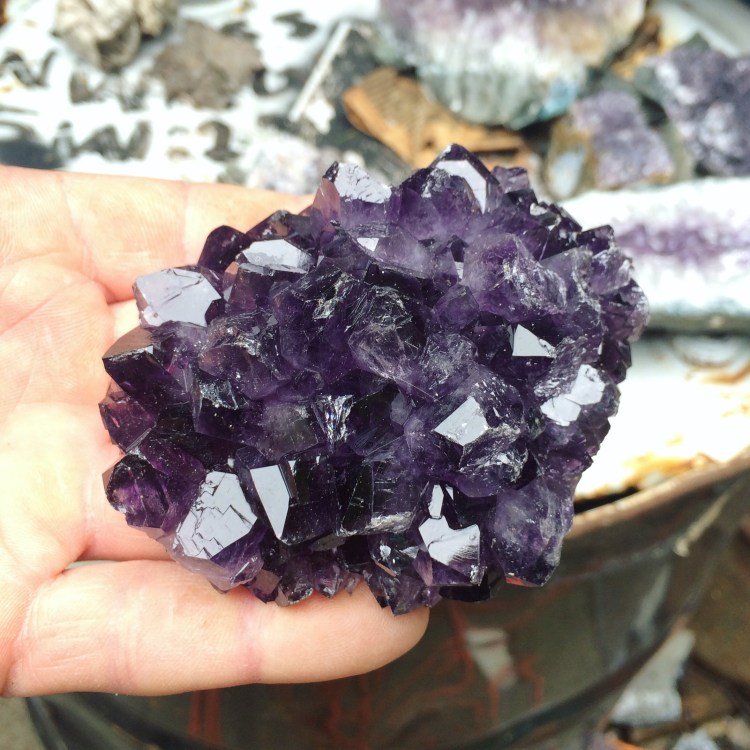
Amethyst balances and heals all chakras, but is especially helpful with the third eye and crown chakra, however it can also open the heart chakra. It helps ground you when your third eye is open. It also stimulates the Etheric Chakras above the head.
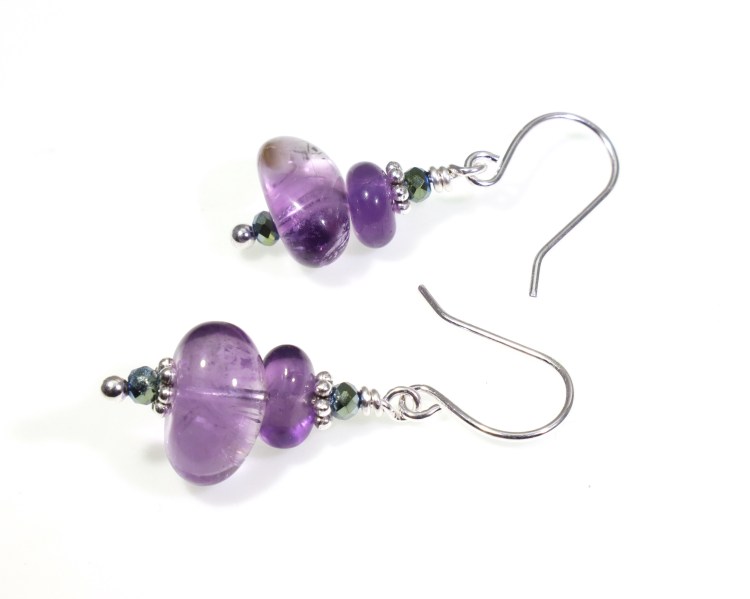
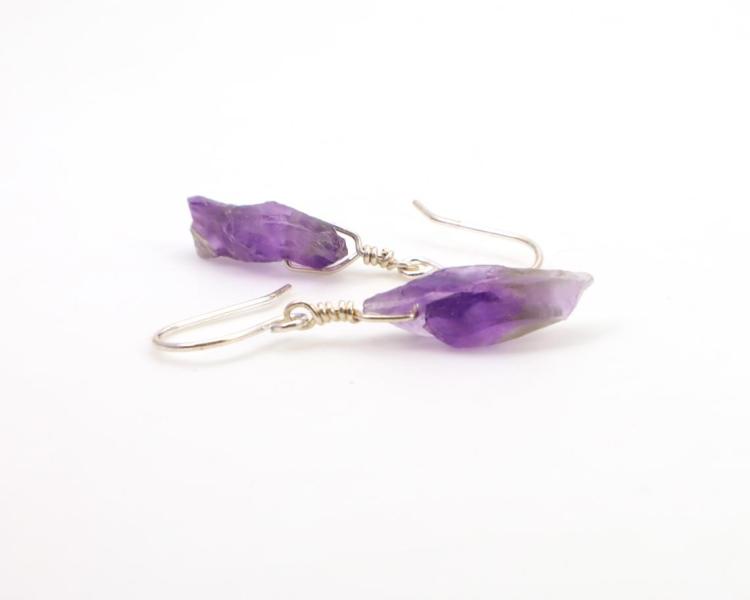
Amethyst is usually cut or polished to make beads, pillars, wands, spheres or faceted gemstones. Above are nuggets that have been tumbled and drilled. These earrings are in my shop.
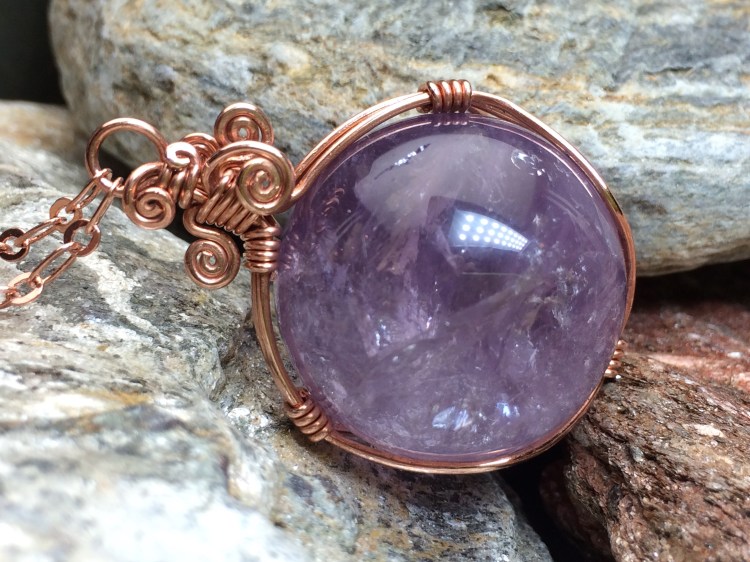
Amethyst spheres fill the aura with violet rays and prepare one to make better use of other crystals. Amethyst spheres also help remove resistance so higher energies can enter, even at cellular level.
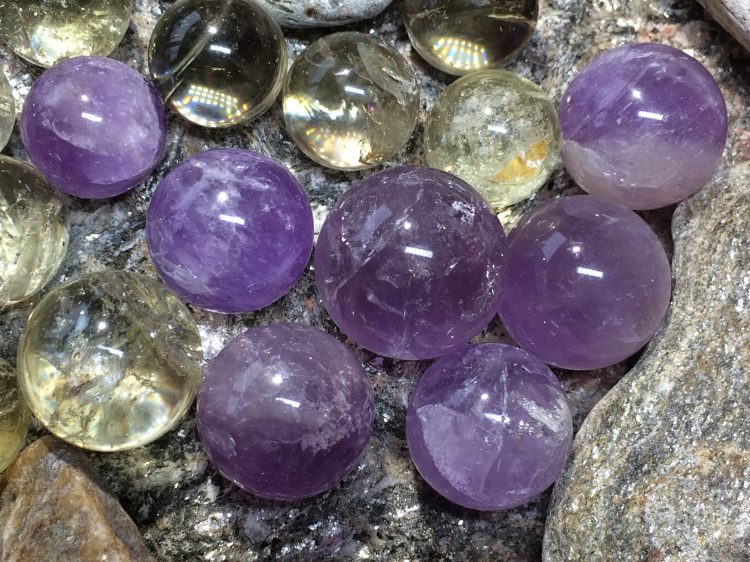
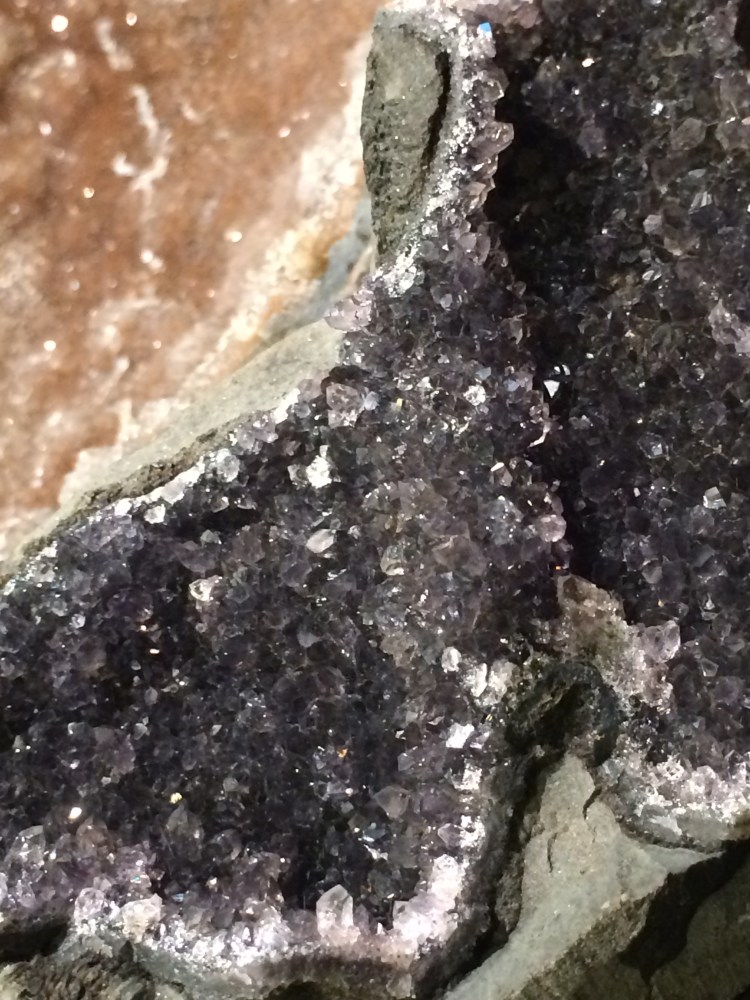
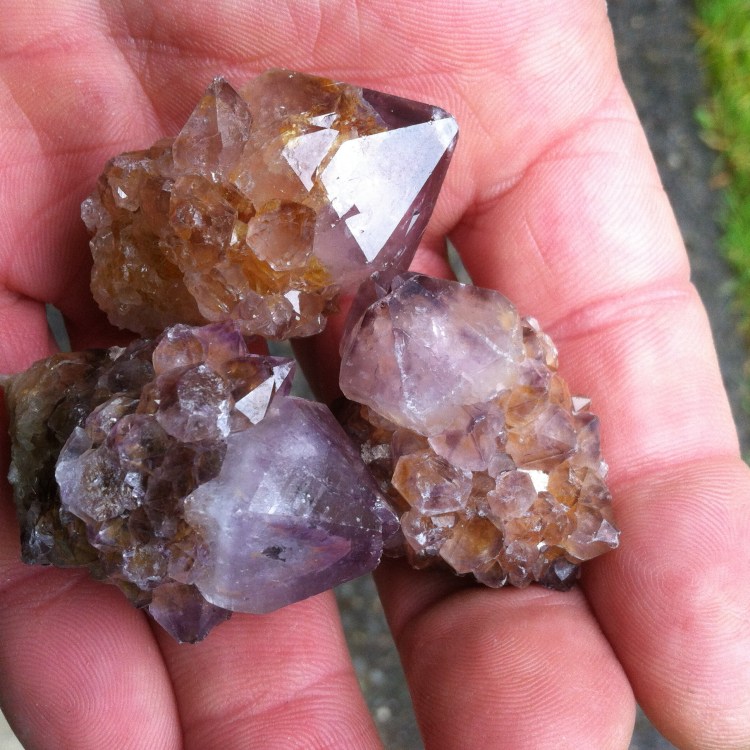
Amethysts typically grow on clusters like the photo below. Each crystal typically has one termination (point.) Most of these crystals are then broken from the matrix, and then sold for cutting, faceting or jewelry making.
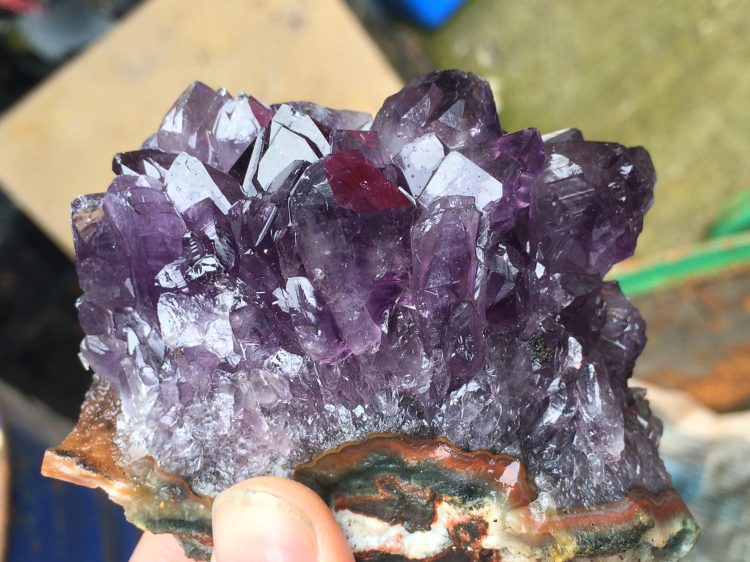
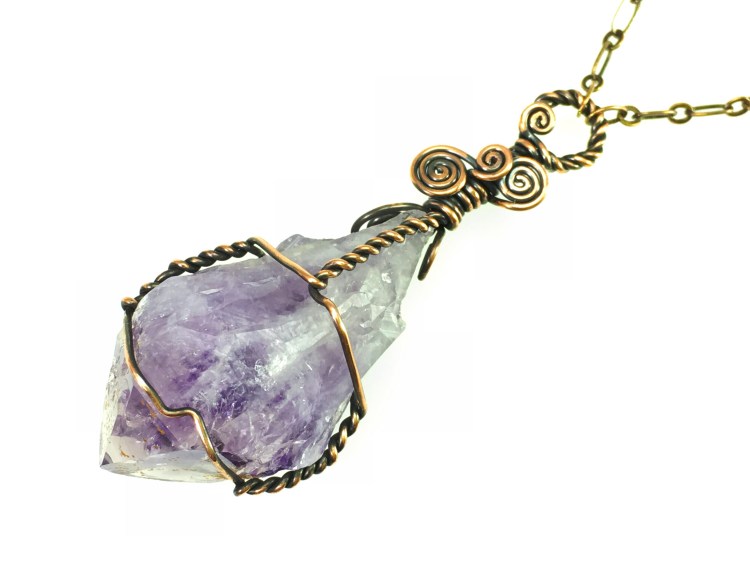
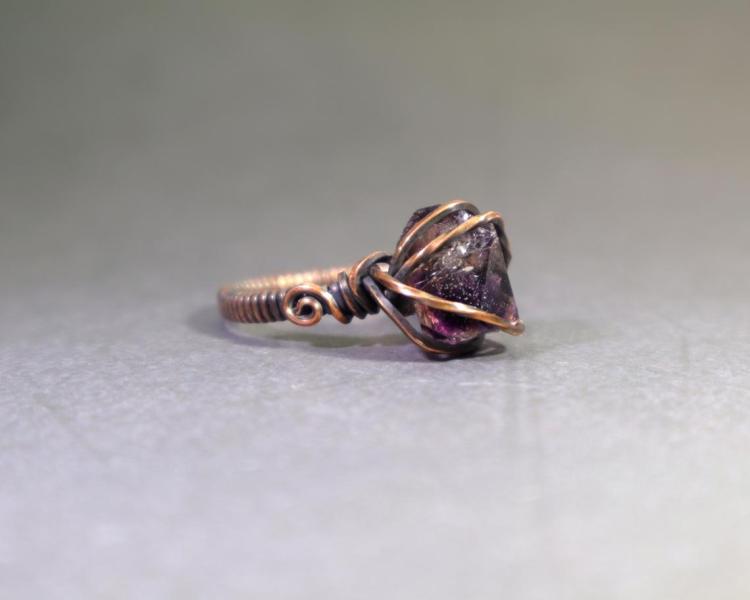
When the termination is intact, they are called “raw crystals”, and when they are broken pieces, they are called “rough.” The amethyst in the pendant below is “raw”.
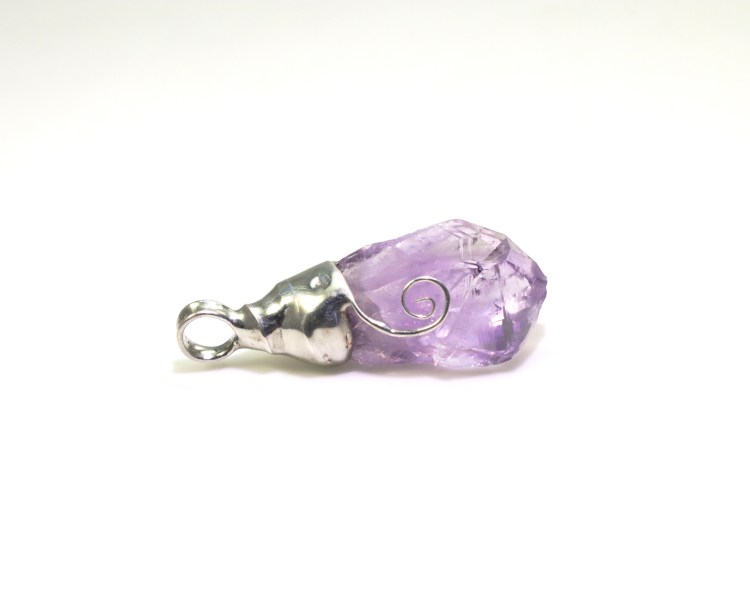
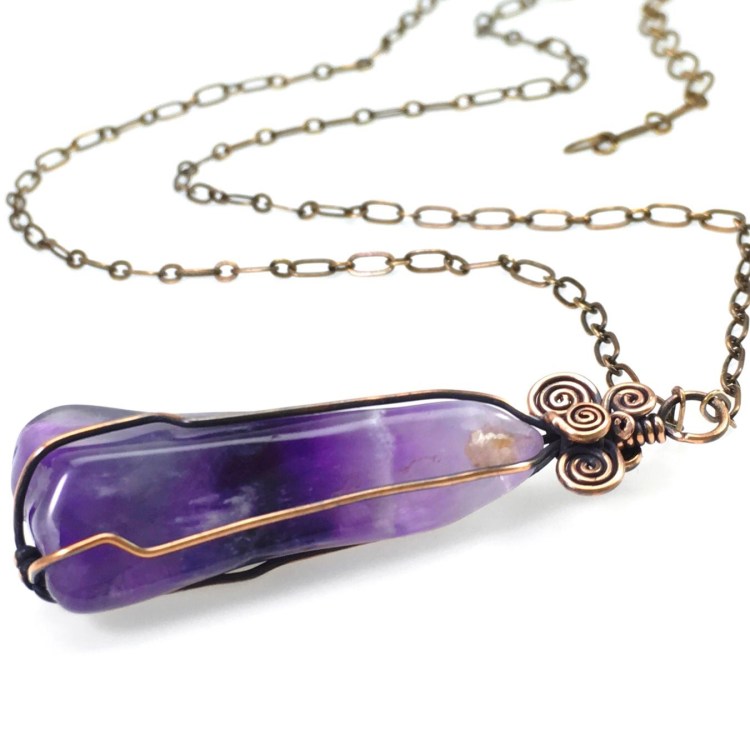
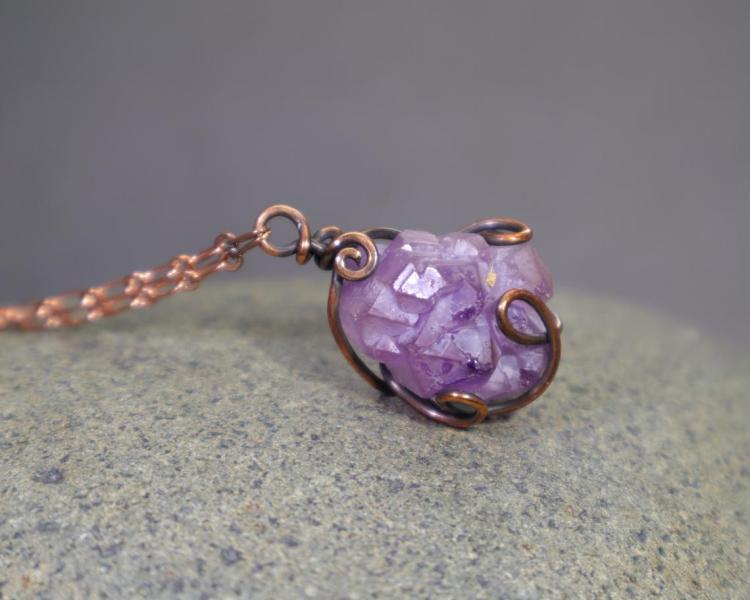
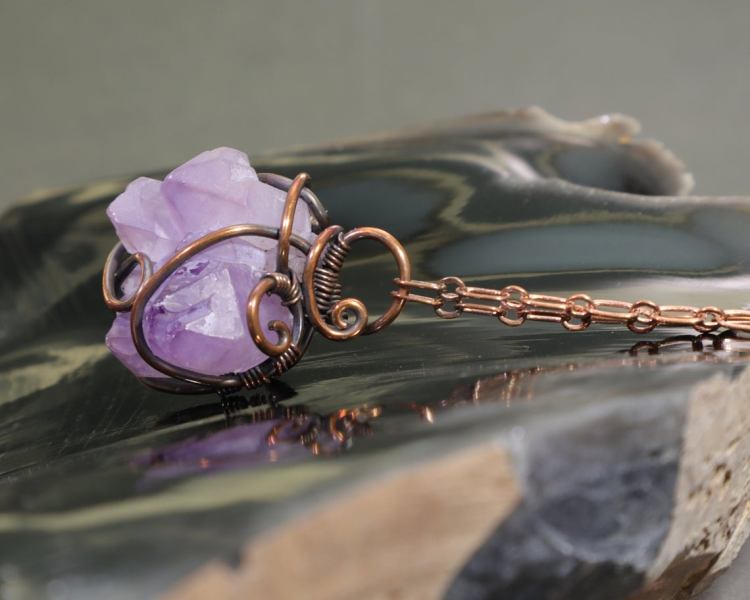
Most raw amethyst has a “dog tooth” shape, like the crystal in the pendant above and the necklace below. “Dog Toothed” amethysts lack the m-faces that quartz typically has due to growth interference caused by the crystals growing adjacent to them on the cluster.
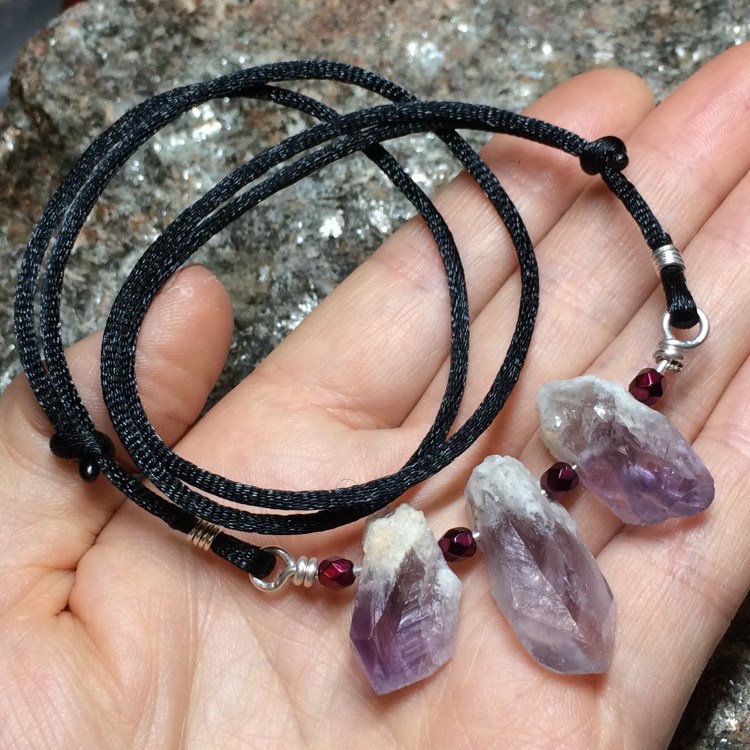
Compare the amethyst crystal’s “dog toothed” shape (above) to the raw quartz crystal below. Notice that the dog-toothed shape crystals lack m-faces, which are the long facets that run nearly parallel down the length of the crystal leading toward the termination (aka, the “point”.)
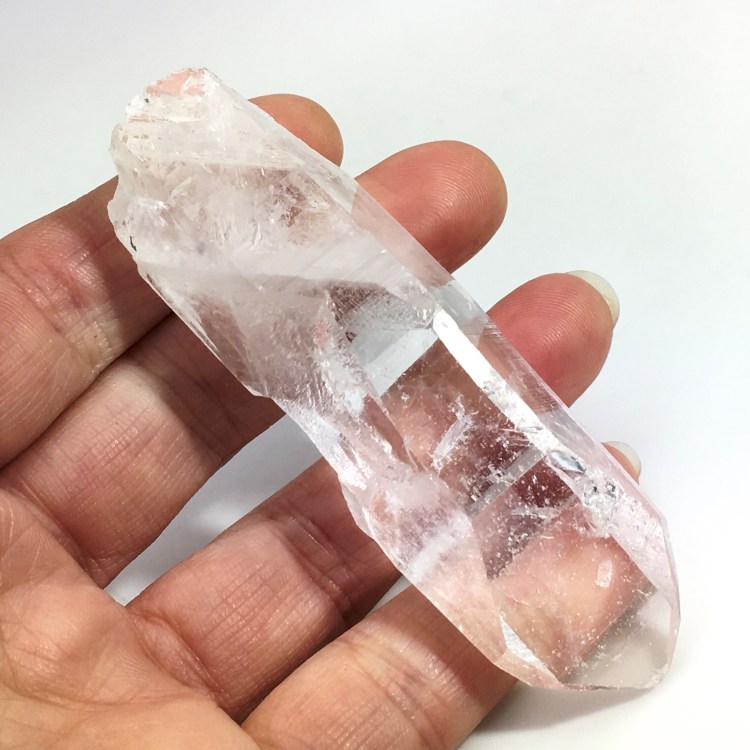
Sometimes a crystal falls off the matrix at some point during the growth, then continues to grow, forming one or more additional terminations. These “double-terminated” crystals are often called floaters. When there are three or more terminations, two or more of them pointing in the same direction in a bit of a mess like the crystal below, they are called elestials. These are not common growth forms, particularly for amethyst. Metaphysically, elestials are strong tools for transformation, and the perfect crystal for creating harmony and growth in group situations.
When amethyst is heated to 842°F (450°C) it turns yellow. 99% of the “citrine” on the market is actually heat-treated amethyst. Most of the time this is done by man using amethyst with less than ideal color, but sometimes it does happen naturally. There is such a thing as unheated citrine, which is colored by aluminum, lithium and hydrogen instead of iron, but it is very rare. The industry name for this type of citrine is lemon citrine, and it is quite rare. The photo below shows a lemon citrine from Russia. Notice the m-faces, like what you see in clear and smoky quartz. Most heated amethyst does not have m-faces. For information on how to tell the difference between heated-amethyst citrine and lemon citrine, check out my article here.
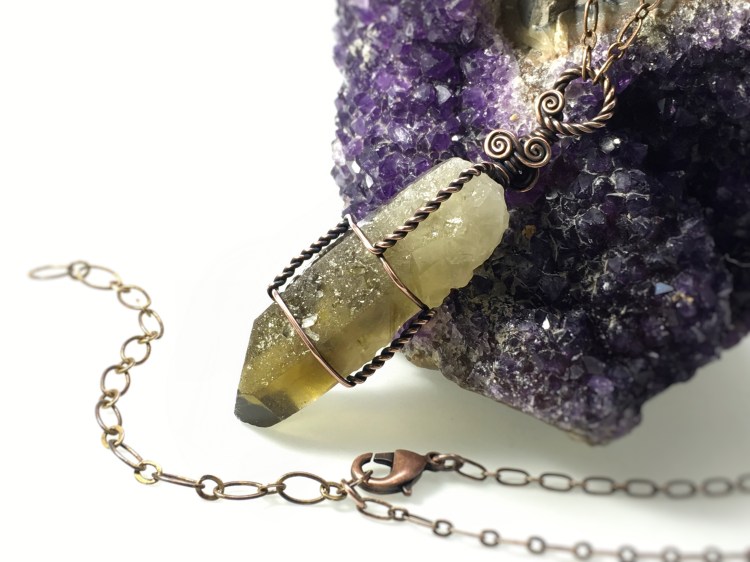
Another interesting amethyst growth form is called spirit quartz, shown below. Sometimes spirit quartz can be ametrine, which is amethyst and “citrine” in the same crystal. For spirit quartz ametrine, an amethyst crystal grew first, then it was exposed to high heat changing it to heated-amethyst citrine, then more amethyst grew on the outside. Not all ametrine is spirit quartz and not all spirit quartz is ametrine.
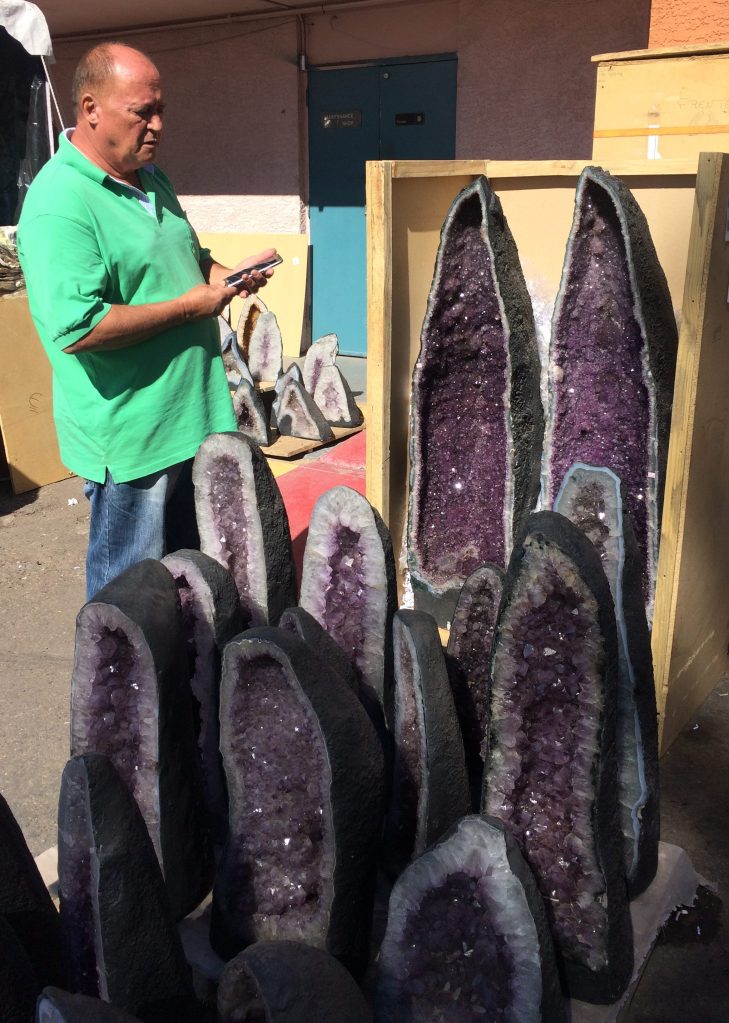
Most amethyst and heated amethyst citrine come from Brazil. The crystals grow in tall “cathedrals”. Here are some amethyst cathedrals I saw in Tuscon, AZ at the Gem Show.
Another important supply of amethyst comes from Uruguay. These crystals are highly valued for faceting due to their fantastic clarity and deep coloration. Uruguayan amethyst doesn’t grow in cathedrals; it grows in “geodes” which are more round. Here a photo of an enormous Uruguayan amethyst. Note: I did not take this photo; it was given to me by my supplier. I do not know who the lovely lady is posing inside, but I wish I was her.
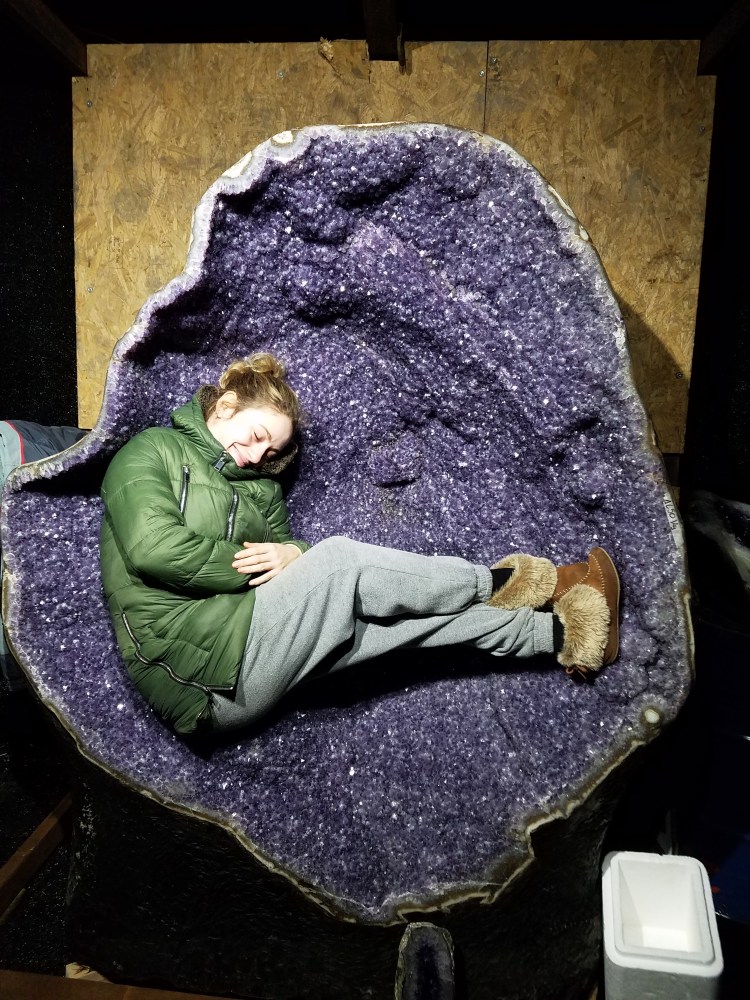
My suppliers cousins owns one of the mines and he says that the geodes are often filled with water, which the workers drink and they swear it gives them great health. There isn’t anything toxic the typically grows in these geodes, but do be aware there are many toxic minerals on this earth, so please don’t drink random geode water. Lol.
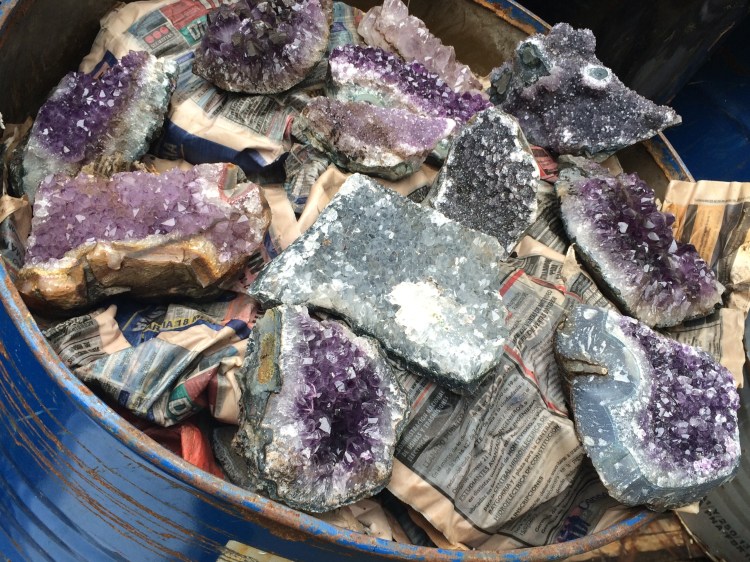
Something really spectacular about the amethyst from Uruguay is that sometimes you find a stalactite. The stalactite below has calcite crystals growing on the outside. Underneath the amethyst on the matrix is agate in a variety of different colors.
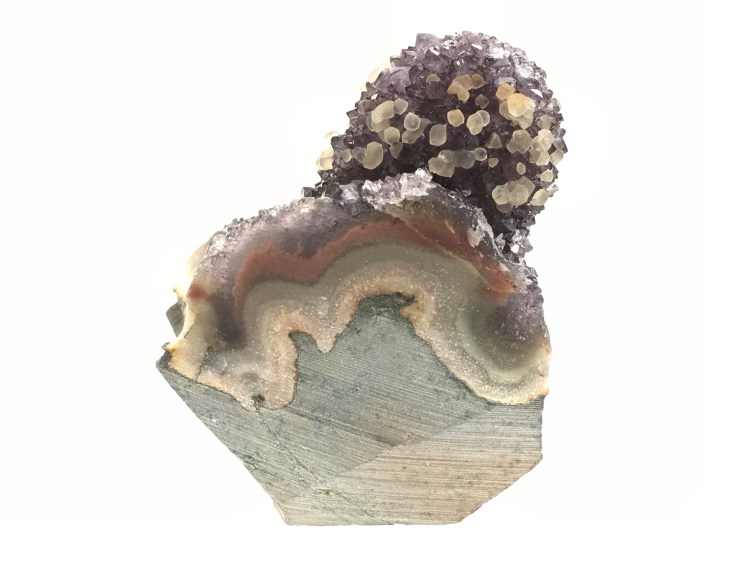
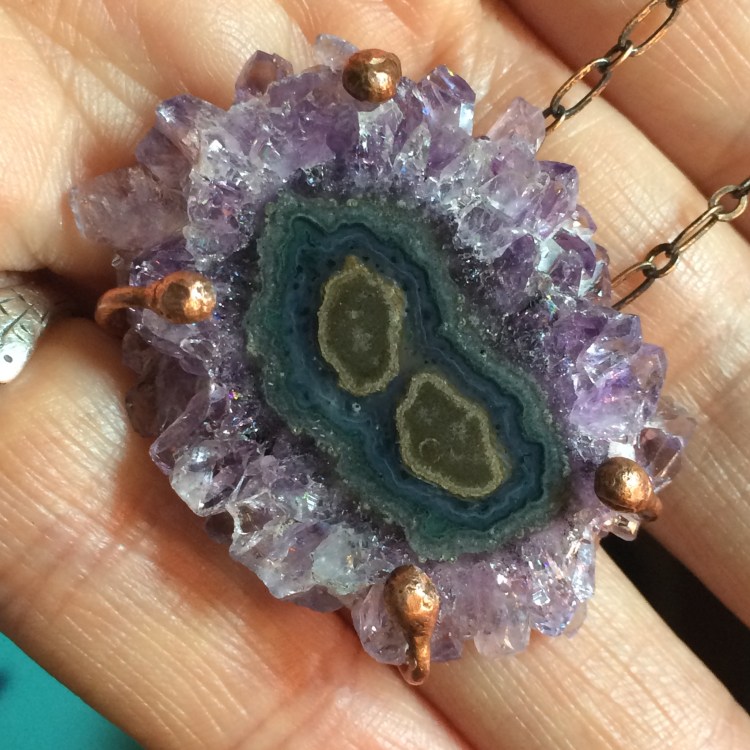
These stalactites can be sliced and polished into these amazing little gems. This is an amethyst stalactite I made into a necklace.
To check out all the amethyst products currently in my etsy shop, click DoodlepunkArt.

© Jennifer Shipley
The text in this listing is the intellectual property of Jennifer Shipley. Please do not copy without written consent.
 Art, Jewelry & Gemstones | DoodlepunkArt